Today, more than 473 million children live in conflict-affected environments, where access to education, safety, and psychosocial support is severely limited – with more than 52 million children out of school. Unaddressed trauma in the early years can affect brain development, and increase the likelihood of poor life outcomes. In the face of a growing global polycrisis, can we reimagine how we support children living through conflict and displacement?
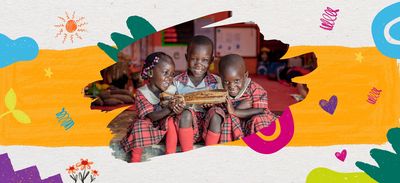
A new five-year, $50 million partnership between BRAC and the LEGO Foundation represents a strategic, first-of-its-kind collaboration, uniting global leadership in development and learning through play to deliver lasting impact for children in crisis situations. Together, the two organisations will reach 400,000 children in Bangladesh and Uganda, providing safe, inclusive spaces where children can play, learn, and build resilience in some of the world’s most fragile settings.
The partnership was announced against the backdrop of the Global Caregiver Forum, where world leaders came together around a shared commitment: accelerating action and investment in parenting and caregiver support so every child can thrive, as envisioned in the 2030 Agenda for Sustainable Development. The Forum, co-hosted by the Government of Spain, UNICEF and WHO, with support from the Global Initiative to Support Parents, underscores the power of collective action.
Building on a decade-long collaboration, the partnership is designed to be adaptive and responsive. Through annual reviews, BRAC and the LEGO Foundation will adjust activities based on emerging evidence and evolving needs. A rapid response mechanism will also enable BRAC to deploy child-focused interventions during acute emergencies across Africa and Asia.
“As the current era of polycrisis places millions of children in the midst of conflict and instability, learning and play are more essential than ever. This is the start of a bigger movement to meet this challenge with the urgency it deserves, grounded in our shared commitment to adaptive, holistic programming,” says Shameran Abed, Executive Director, BRAC International.
BRAC and the LEGO Foundation initially came together to pioneer the Humanitarian Play Lab model. This partnership now builds on that work, strengthening responsive caregiving and early childhood development, play-based learning and smoother transitions to primary school, alongside skills development and psychosocial support for adolescents.
“This partnership with BRAC is rooted in our shared belief that every child, regardless of their circumstances, deserves the dignity of a childhood where they can grow, thrive and learn. In fragile contexts, play is a powerful tool for healing and hope. By combining BRAC’s deep local knowledge with a focus on play and psychosocial support, we aim to support children and their families in some of the world’s most challenging environments,” says Sidsel Marie Kristensen, CEO of the LEGO Foundation.
To expand access to learning and play for children living in crisis situations worldwide, BRAC and the LEGO Foundation also invite other partners to join them.
ABOUT THE LEGO FOUNDATION
The LEGO Foundation is a Danish corporate foundation working with partners around the world to support children’s needs and champion the dignity of childhood. The foundation exists to build the conditions, and create the space, for every child, everywhere, to thrive and grow.
ABOUT BRAC
BRAC is an international development organisation founded in Bangladesh in 1972 that has partnered with over 145 million people living with inequality and poverty to create opportunities to realize human potential. BRAC works with communities in marginalised situations, hard-to-reach areas and post-disaster settings across Asia and Africa, with a particular focus on women and children. Born and proven in the South, BRAC operates as a solutions ecosystem, including social development programmes, social enterprises, humanitarian response, a bank and a university.