Climate Bridge Fund: Enabling locally led adaptation in urban Bangladesh

This study originally appeared on the OECD website, read the full report here.

Abstract

The Climate Bridge Fund (CBF) – established by BRAC, an international development non-profit in Bangladesh, and financed by Germany via KfW Development Bank – aims to strengthen the resilience of people in urban communities who are displaced or at risk of displacement due to climate change. To that end, the CBF uses income from endowment interest to provide grants and capacity support directly to local non-governmental organisations (NGOs) to implement locally led climate adaptation projects.

Challenge

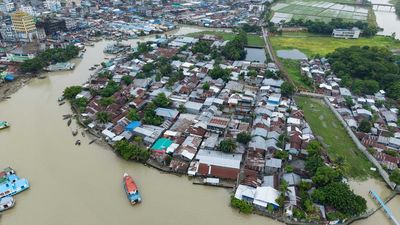
In 2024 alone, climate change displaced 2.4 million people in Bangladesh. Many were forced into overcrowded urban slums following the loss of livelihoods, assets and property in their place of origin. Within these vulnerable communities, women, gender-diverse people, persons with disabilities and returnee migrants, in particular, face high systemic barriers that weaken their resilience to shocks and access to public services. For decades, civil society and NGOs in Bangladesh have been playing a vital role in delivering public services to these communities. However, accessing climate finance is challenging because the processes are complex, demanding significant human and financial resources.

Approach

BRAC – an international development non-profit founded in Bangladesh in 1972 – established the Climate Bridge Fund (CBF) in 2019 with support from Germany via the KfW Development Bank. The CBF unlocks funding to climate finance for people displaced or at risk of displacement due to climate change. The mechanism builds on partnerships between government, large NGOs and small local groups, an inclusive approach that ensures frontline communities can lead their own long-term resilience efforts, tackling both economic and non-economic losses from climate change.

The CBF combines predictable, locally directed financing with technical assistance and relatively rapid disbursement to bridge the gap between short-term project funding, and sustainable services and infrastructure.

  • Flexible portfolio: the Climate Change Window (CCW) focuses on long-term adaptation, while the Emergency Response Window (ERW) addresses the urgent needs of vulnerable urban communities, such as COVID-19 and other disasters.
  • Sustainable funding: the CCW operates in an endowment fund model that supports adaptation projects using interest earned from treasury bonds to support the fund sustainability. The ERW follows a depleting fund model.
  • Locally-led and inclusive: the CBF ensures interventions reflect the socio-economic contexts and intersectional vulnerabilities of the communities they serve. According to the selection criteria, projects must involve communities and local government authorities, and include equitable representation of climate-induced migrants. Since the 2023 funding cycle, the CBF introduced stricter requirements for gender inclusion. Proposed projects must include gender-responsive or transformative activities to be eligible for CBF support.
  • Access to funding and capacity strengthening for local NGOs: the CBF Secretariat supports local implementing partners with technical guidance in areas such as climate adaptation, gender mainstreaming, reporting and financial compliance. To maximise community impact, CBF partners are expected to direct 60-70% of operational spending locally. The Fund Secretariat ensures financial oversight, monitoring, evaluation and learning in co‑ordination with local authorities to facilitate long-term accountability and sustainability.
  • Inclusive knowledge sharing: the CBF Secretariat established the Climate Resilient Development Forum (CRDF) in 2025, a platform for local authorities, NGOs and community representatives to exchange knowledge and promote effective climate adaptation practices.

Results

The CBF has enabled smaller, locally rooted organisations to access and implement climate adaptation projects. By empowering local systems and scaling community-driven climate adaptation in Bangladesh, CBF-supported interventions delivered social and economic results. Results include:

  • Regular funding leveraged from investments: with initial seed money of about USD 22 million, the CBF has mobilised about USD 2 million each year from its investments in public bonds. It has provided grants to 26 projects as of September 2025.
  • Faster, smaller grants with predictable annual income for local communities and organisations: grant-making is based on annual investment income rather than on providers’ budgetary cycle. Consequently, the CBF can offer patient and predictable funding streams and smaller grants tailored to community-scale activities. On average, access to funding takes less than six months from application to initial disbursement, which is faster than many provider channels.
  • Strengthened operational, financial and technical capacities of 20 grassroots organisations, while more than 200 organisations were trained in climate adaptation and planning: CBF partners were enabled to improve their project proposals by incorporating more practical and innovative designs and plans, and secure additional funding from other sources.
  • Improved socio-economic welfare for 15 000 vulnerable households: skills development, entrepreneurial training and direct financial assistance have improved the lives of the most vulnerable, especially women and climate-induced migrants. With women representing 71% of the people supported by these activities, CBF support helped reduce income gaps between men and women by 13% and increased the role of women in household decisions. In addition, it helped establish inclusive water, sanitation and hygiene (WASH) infrastructure for more than 100 000 people. Meanwhile, flood-resilient walkways and drainage systems benefitted 27 000 people who lived in slums.
  • Support for locally-led innovation and scaling: structured knowledge sharing, such as regular learning exchanges, peer-to-peer engagement and independent evaluations, has helped refine practices and foster innovation, such as maximising co-benefits. In one CBF-funded project, for example, an NGO designed toilets resilient to inundation and resist climate-induced weather extremes. Individuals in Gaibandha and Khulna districts, who were not part of any CBF projects, replicated the design of these toilets.

Lessons Learnt

  • Endowments need large up-front capital and strong stewardship: the CBF’s endowment model provides predictable funding for grant-making and enables longer-term plans. Thus, the capacity to fund projects depends on a sufficiently large initial capital investment and a host institution that can manage investments transparently.
  • Strong local co‑ordination is key for community ownership and local governance for sustainability: involving local communities and authorities in project design, planning and monitoring helps ensure long-term success and meet the needs of all groups. Local co‑ordination improves the alignment of projects with local policies and development plans. It also increases the chances of local governments continuing and expanding these efforts after CBF support ends.
  • Targeted eligibility criteria are not enough for local actors to access funding: the CBF Secretariat deliberately targeted eligible local organisations with strong governance. In addition, the available funding covered administrative costs and provided continued technical assistance, monitoring and evaluation support, and financial management training.
  • Dual windows and flexible financing can support long-term resilience to climate change: distinct windows let local actors match funding to adaptation or emergency needs. Contingency funds and adaptable financial mechanisms help project holders address unforeseen challenges. These could range from inflation and technical setbacks to socio-political disruptions that are inherent to climate change adaptation. Tracking the evolution of climate projections is key to delivering lasting results.
  • Comprehensive and multisectoral approaches, including advocacy to overcome systemic barriers, lead to strengthened adaptation outcomes: housing improvements coupled with WASH services enhanced the resilience of people living in slums by improving their overall living conditions. The Secretariat’s advocacy for land tenure security, continued access to services and inclusion in safety net programmes emerged as a critical enabler of long-term impact.

Further Information

Copy link to Further information BRAC (2025), “Climate Bridge Fund”, https://www.brac.net/program/climate-bridge-fund/ (accessed 16 July 2025).

BRAC (2025), “CBF mid-term evaluation highlights progress and path forward”, May, BRAC, https://www.brac.net/program/wp-content/uploads/2025/08/CBF-Newsletter-Issue-8.pdf.

BRAC (2024), “Five years of catalysing sustainable adaptation actions”, CBF Newsletter, July-December, https://www.brac.net/program/wp-content/uploads/2025/04/CBF-Newsletter-Issue-7.pdf.

OECD Resources

OECD (2024), Pathways Towards Effective Locally Led Development Co-operation: Learning by Example, OECD Publishing, Paris, https://doi.org/10.1787/51079bba-en.

OECD (2023), Development Co-operation Report 2023: Debating the Aid System, OECD Publishing, Paris, https://doi.org/10.1787/f6edc3c2-en.

To learn more about other development co‑operation practitioners, see: More In Practice examples are available on Development Co-operation TIPs • Tools Insights Practices.