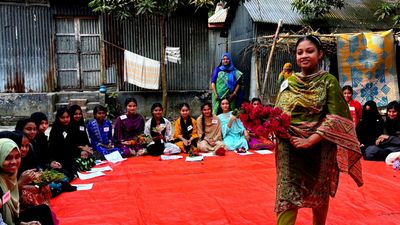
This blog was written by BRAC Europe's Board Member Serap Atinisik, and originally appeared on LinkedIn.
These are some concluding reflections from my time with BRAC in Bangladesh, a week that deeply impressed me, during which I learned an incredible amount and gained insights I will carry with me into the future.
1. BRAC Institute of Skills Development
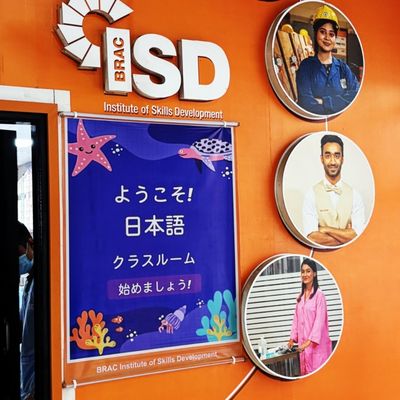
The BRAC Institute of Skills Development, a key pillar of BRAC’s Skills Development Programme, felt to me like a journey of continuous discovery. Every time a door to a training room in the Learning Centre opened, “a new magic appeared” to borrow the words of Divya Bajpai , Executive Director of BRAC Europe.
Let me begin with the numbers, which speak powerfully for themselves: there are currently 10 institutes and to date more than 600,000 people have completed training programmes, 57% of whom are women. The job placement rate is truly astonishing at 80%. This means that nearly half a million people have entered employment thanks to BRAC. In addition, the average household income increases by up to 78% after skills training. That is what I call impact.
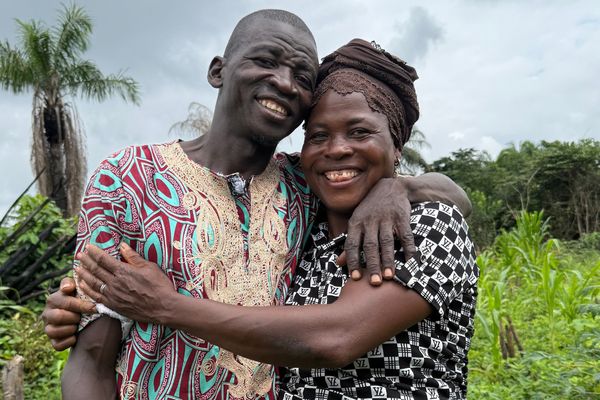
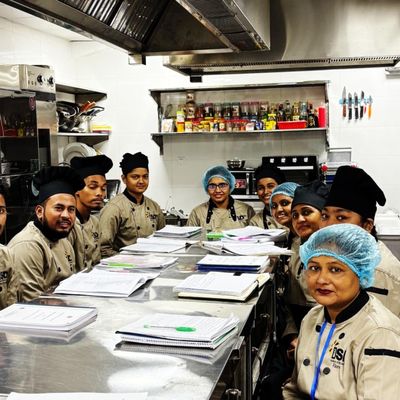
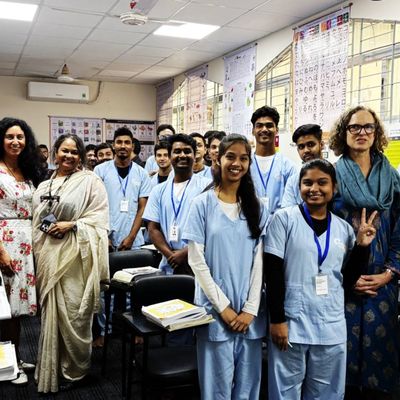
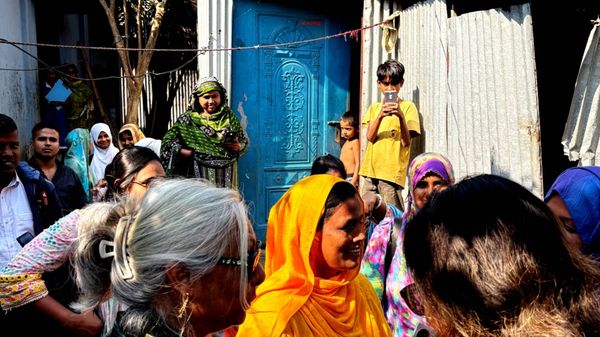
Beyond the statistics, what I experienced first-hand was the remarkable confidence of the participants, clearly visible in their presence and audible in the way they spoke. Some of the photos I share below capture both the joy of learning and the strong sense of self-confidence among the trainees. Above all, I would like to thank the BRAC colleagues who not only teach job-ready skills with great professionalism, but who also strengthen participants’ confidence through trust-based and supportive relationships.
As Asif Saleh, Executive Director of BRAC, perfectly summarises the success of this programme: “It costs a few hundred dollars to equip a girl with skills through an apprenticeship, which far outweighs the cost of her untapped potential.”
2. Ultra-Poor Graduation Programme (UPGP)
A common thread running through all my observations was the growth in self-confidence among participants and their belief in themselves and their future. The Ultra-Poor Graduation Programme embodies this transformation in a particularly powerful way.
Over a period of two years, the programme provides participants with:
- Cash and/or food support to ensure basic needs are met.
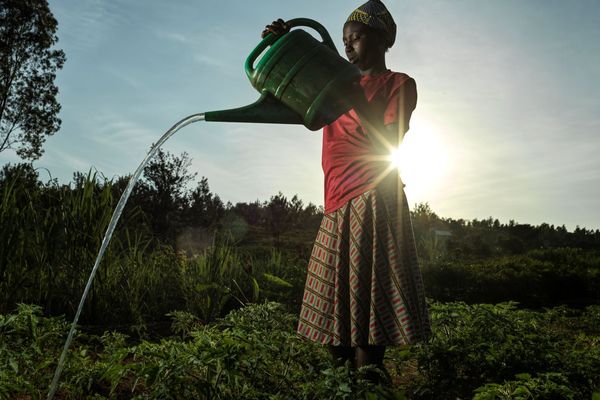
- An asset, such as livestock, to build a dignified and sustainable livelihood.
- Training in budgeting, saving and investing.
- Social integration, both within groups of women facing similar circumstances and within the wider community.
- Weekly mentoring and counselling from BRAC colleagues.
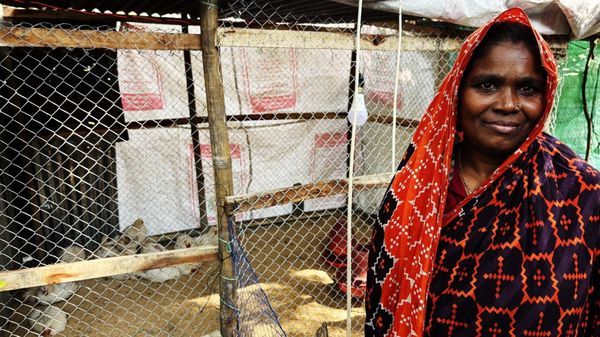
During our visits to programme participants in the Pakundia area, I saw clearly how the length of time spent in the programme influences women’s self-image, pride and social integration. Molina, who has been part of the programme for five months, is now able to earn her own living through ducks, chickens, a cow and compost to grow ginger leaves. Yet she still carries deep emotional pain from the time when both her family and community viewed her as a burden and avoided her.
By contrast, another participant who has been in the programme for over nine months spoke with visible confidence and pride about her progress. Through her income, she has already been able to save and invest in an additional cow.
The highlight, however, was the story of the third woman, who completed the programme several years ago. Today, she is a confident businesswoman who owns a brick house, several goats and cows and one acre of land and she plans to invest in more land to further increase her income. Her eyes sparkled as she spoke about her children and her dream of seeing them pursue higher education.
In Bangladesh alone, more than two million women have participated in this programme, benefiting over nine million people. The programme costs approximately USD 500 per household over two years. Research by the London School of Economics shows that 92% of participants not only maintain but often improve their living standards - even 11 years after graduation! What an extraordinary achievement. The UPGP is now being implemented in 17 additional countries.
Witnessing how these women are shaping their own futures, supported by BRAC colleagues in a dignified and context-sensitive way, was truly inspiring.
3. Microfinance
I have always had mixed feelings about microfinance until I finally had the opportunity to see its impact first-hand. BRAC colleagues introduced us to women who, through microfinance, are not only sustaining their own livelihoods but also creating jobs for other women and men in their communities.
BRAC is a pioneer of microfinance and today the world’s largest microfinance institution. In Bangladesh, where three out of four people lack access to a bank account, small loans provide a critical pathway for people to invest in their families, communities and aspirations. Recognising this gap early on, BRAC began by expanding access to microloans for those who needed them most. Over time, it added savings services and building on this foundation, introduced further financial tools such as microinsurance to strengthen resilience.
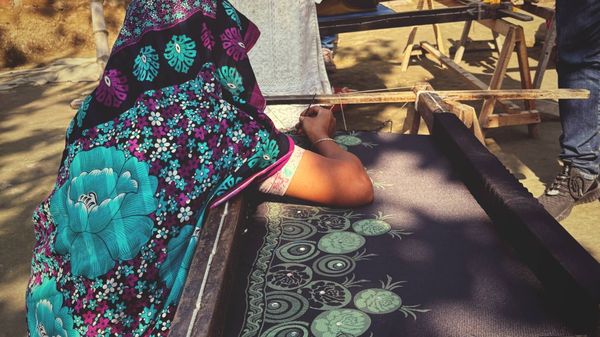
One of the photos I share below shows a woman in the Kishoreganj Sadar area who now employs 70 people thanks to BRAC microfinance. With her initial loan, she purchased materials and equipment to supply handmade garments to shops in Dhaka. Her nephew supports her by communicating design requirements and quantities and delivering finished products to retailers. She started alone and through her success, has secured income for 70 women in her community and plans to hire even more as demand continues to grow.
What moved me deeply was not only her confidence, but also the trust between community members and BRAC colleagues. This is what it truly means when services are delivered by people from the same communities who deeply understand local needs. This is locally led organising in practice, something BRAC lives every day.
More than 16 million people, primarily women, have gained access to microfinance through BRAC. After meeting so many women who are supporting not only themselves but also their families, neighbours and neighbouring villages through microfinance, I am now fully convinced of its transformative power.
4. Social Empowerment and Legal Protection
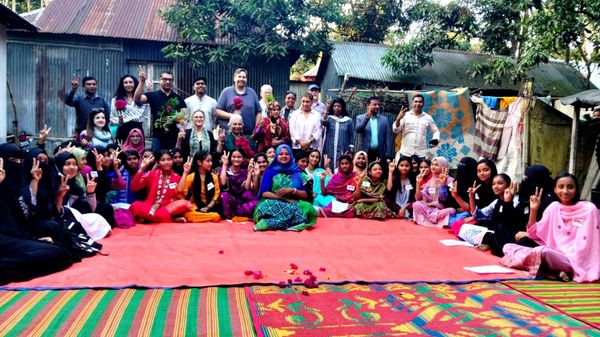
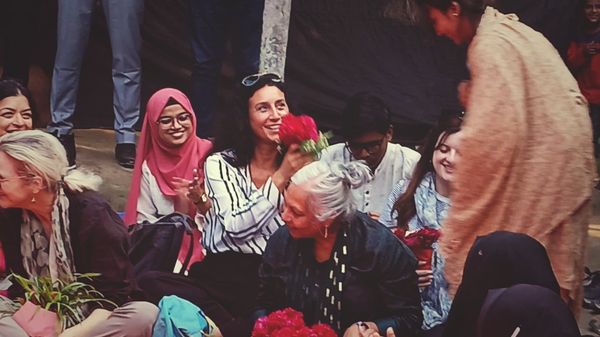
As many know, my heart beats especially strongly for girls and adolescent girls and BRAC certainly did not disappoint in this area. It was deeply heart-warming to be welcomed so warmly and confidently by the “Shawpnosharothi” group, made up of girls aged 14 to 18. Translated literally, the name means “Dream Guides.”
We had an open and honest conversation in which the girls shared their dreams of becoming teachers, nurses, doctors or engineers. They spoke about how they support one another, how they have learned to set boundaries and how they have learned that “no” truly means no.
One story in particular touched us all deeply: one of the girls told us how the group collectively protected another member from child marriage. When they learned that her parents planned to marry her off, they went together to speak with them and explained that their daughter’s dreams could not be fulfilled if she were forced to marry so young. As a result, she was able to remain in the group and continue working toward a self-determined future.
What a powerful example of collective action and solidarity among young women. I am convinced that many of them will realise their dreams.
5. OneBRAC Day
With all these impressions, I had the privilege of attending OneBRAC Day, an event that brought together board members from across BRAC entities as well as executives and senior management. In a room full of brilliant minds, participants jointly reflected on the global political landscape and the changing development and humanitarian sectors. Together, we explored how BRAC - rooted in the Global South and shaped by decades of experience - can continue to play an effective and impactful role in supporting the poorest communities.
What struck me most was the pragmatic, solution-oriented “can-do” mindset. Diverse perspectives were welcomed and discussions focused on what works, what should be scaled up (and adapted to different contexts) and where improvements are needed - guided by research and evidence - so that interventions truly benefit those most in need and drive structural change in both policy and economic systems.
This unwavering focus on mission and vision, always centred on people and shaped together with them, is what creates lasting change and why BRAC is so successful. I am deeply grateful to have witnessed a different, highly effective way of doing development!