Below is an excerpt of an article originally published in the Dhaka Tribune. Read the full article here.
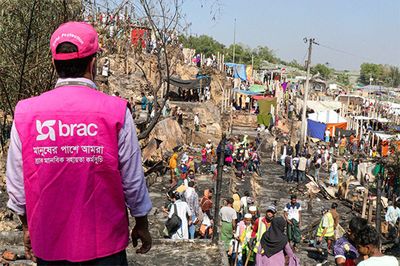
There is a child in Cox’s Bazar who has never known any home but a camp. She was born somewhere between bamboo and tarpaulin to parents who crossed jungles and rivers in the dark of August 2017.
She is nine years old now. She has never seen Rakhine State. She does not know what citizenship feels like. And, by any official count, she remains a “temporary” presence in Bangladesh.
This August marks nine years since the most violent chapter of the Rohingya exodus. More than 723,000 people crossed into Bangladesh after August 25, 2017, fleeing what the United Nations described as textbook ethnic cleansing.
According to UNHCR Bangladesh, the country now hosts more than 1.2 million Rohingya, over 90% of the world’s displaced Rohingya population, in 33 camps in Cox’s Bazar and on Bhashan Char. More than half are under 18.
Bangladesh opened its borders and thereby absorbed enormous pressure on Cox’s Bazar’s land, forests, water, and livelihoods. Host communities watched resources increasingly favour the refugee response.
Bangladesh has consistently called for safe, dignified and voluntary repatriation; although Myanmar agreed in principle in early 2025 to accept 180,000 Rohingya initially, with another 70,000 under verification, the process has stalled amid the Arakan Army’s control of much of Rakhine State and Myanmar’s political turmoil.
The roadmap exists on paper. The road does not.
Read the full article in the Dhaka Tribune. Or read more about BRAC's Pooled Fund for Localisation here.